Using Clever Tricks to Fool the Public
The United States constitution states, in Article 10 “No state shall…make any Thing but gold and silver Coin a Tender in Payment of Debts…”.
This was written in to the constitution of the United States to protect the citizens against government making money from nothing. With gold or silver, the money supply was restricted by the amount of gold or silver.
With this money, the economy did well. There were gold coins and silver coins. Citizens could save their coins and have the ability to buy things in the future without inflated prices reducing their buying power.
Gold and silver coins were minted with reeding on the edges. This was to prevent “clipping” of coins, or taking small amounts of the metal from the edges. Some people would clip coins, sell the metal shavings, and spend the clipped coins at face value. Reedding is a way to reduce clipping, since a clipped coins would show have smooth edges.
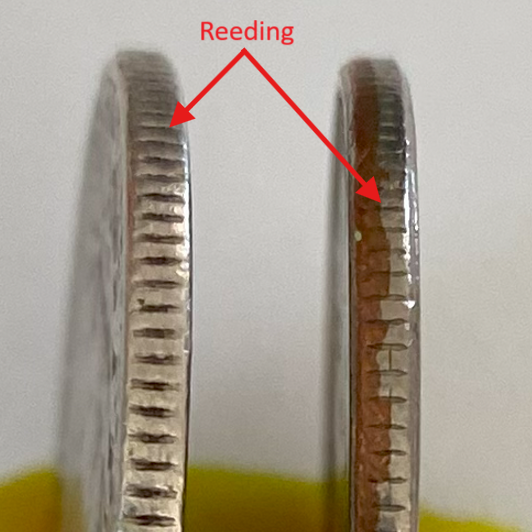
Pictured above: Left: Reeding on a 1964 or older 90% silver quarter. Right: Reeding on a 1965 + copper clad quarter. Note the copper color on the clad quarter.
People recognized the silver and gold content was the value in each coin. Reeding was important to coins to protect the amount of silver or gold in the coins. Other coins were in circulation that did not have reeding. Before the great US counterfeit, nickels were made of nickel and pennies were made of copper. These are base metals. They did not have reeding because the metals were not valuable enough to make it profitable for someone to clip these coins.
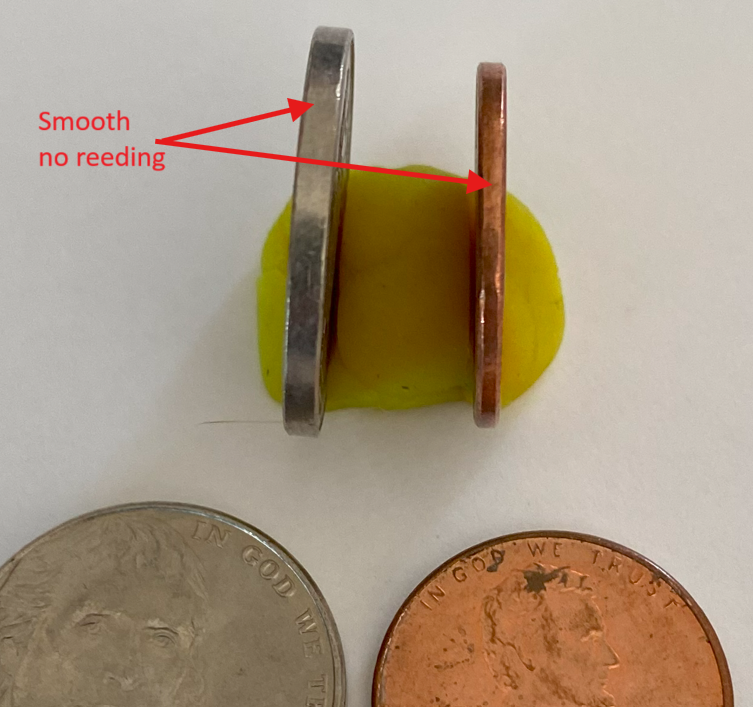
Pictured above: Nickel and Penny coins which do not have reeding.
The great US counterfeit occurred when the content of the coinage was changed. Quarters and dimes went from 90% silver to 0% silver in 1965. They begin to be made of copper with nickel on the outside. Making copper colored quarters and dimes would have made it clear the money had changed. People knew copper was worth a lot less than silver. Those producing the counterfeits wanted to minimize the public noticing the change. To achieve this, they kept the reeding on the coins, even though reeding is not necessary on base metals like copper. They also added a layer of nickel to the outside of the copper quarters and dimes so they had a similar silvery metal color to the originals.
These two features were not necessary for the new coinage. Reeding and a nickel coat were only there to minimize the public’s notice of the new counterfeit coins entering circulation.
The copper penny was around for a long time and did not need reeding. It looked copper because it was copper. This was through 1981. In 1982, the penny started to be made of zinc. Zinc is much cheaper than copper. But, zinc is a silvery metal color. Just like the prior counterfeit, this color change would have alerted the public and drawn attention. To avoid this, the new zinc pennies were coated with copper to hide the change so the public would not pay attention.
 thunkert.com