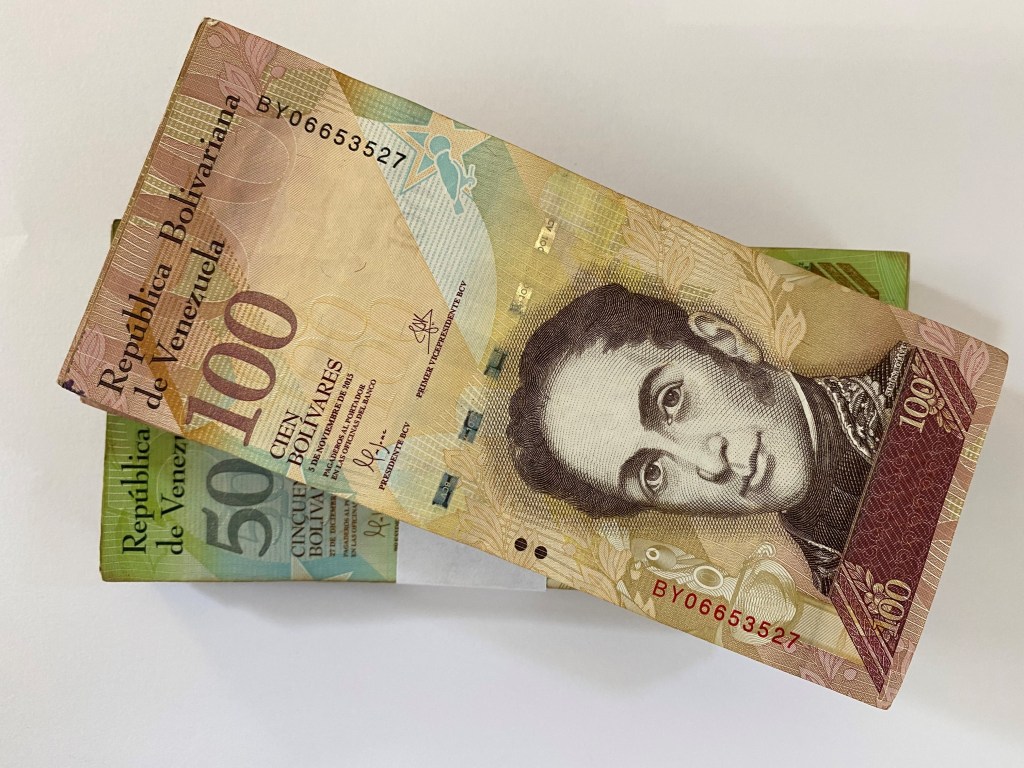
I may have given you a bundle of Bolivares from Venezuela. You may have found one. Welcome. You hold a powerful tool, and part of a tragic story.
Currency is the powerful tool. People worked. They got Bolivares for their work. They used the Bolivares to buy food, housing, and clothes. They didn’t get paid in food. They didn’t get paid in housing or clothing. They got paid in Bolivares. The Bolivares were trusted, they had value. Others accepted them. They traded Bolivares for what they wanted. This is the power of currency.
The Central Bank created more Bolivares each year. This allowed the Venezuelan government to buy things. They could do so without raising taxes. People don’t like more taxes. This looked good. The government bought more things. The things were nice. Healthcare. Housing. Food subsidies. Free Education. Free Land. It was easy to see things the government bought.
Mision Barrio Adentro: Universal Healthcare program of Venezuela.
Mision Habitat: State built housing for the poor.
Mision Mercal: State stores selling food & goods at a loss. (for example, state buys food for $10, then resells it for $5).
Mision Ribas: Scholarships to complete high school.
Mision Sucre: Free university education.
Mision Robinson: Soldier sent to remote areas to teach literacy & math.
Mision Guaicaipuro: Land taken, given to indigenous communities.
Vuelan Caras: Spend to achieve social goals for marginalized groups.
There was no visible tax. But the tax was there. There were not more things in the country. There was more currency. More currency was spent on the same amount of things. Prices went up. The higher price is the tax. This is value that has been taken. Currency needs to hold value. If it does not, people don’t want to hold it long. They don’t want to lose value. They buy things to avoid holding currency. More buying in less time makes things cost more. People spend faster. They are more scared of losing value. The currency loses value more quickly.
The central banks come with a solution. They introduce a new currency. The old currency was flawed. The new currency will be better. The Bolivar has done this 3 times in the last 15 years. Like this:
2008 (January 1): The new “Hard Bolivar” replaced the “Bolivar”. The central bank gave 1 “Hard Bolivar” for every 1,000 “Bolivares”.
2018 (August 20): The new “Sovereign Bolivar” replaced the “Hard Bolivar”. The central bank gave 1 “Sovereign Bolivar” for every 100,000 “Hard Bolivares”.
2021 (October 2): The new “Digital Bolivar” replaced the “Sovereign Bolivar”. The central bank gave 1 “Digital Bolivar” for every 1,000,000 “Sovereign Bolivares.”
Inflation is a tax. When you pay more, you are being taxed.
Thoughts? Thunkert@ProtonMail.com

